Overview
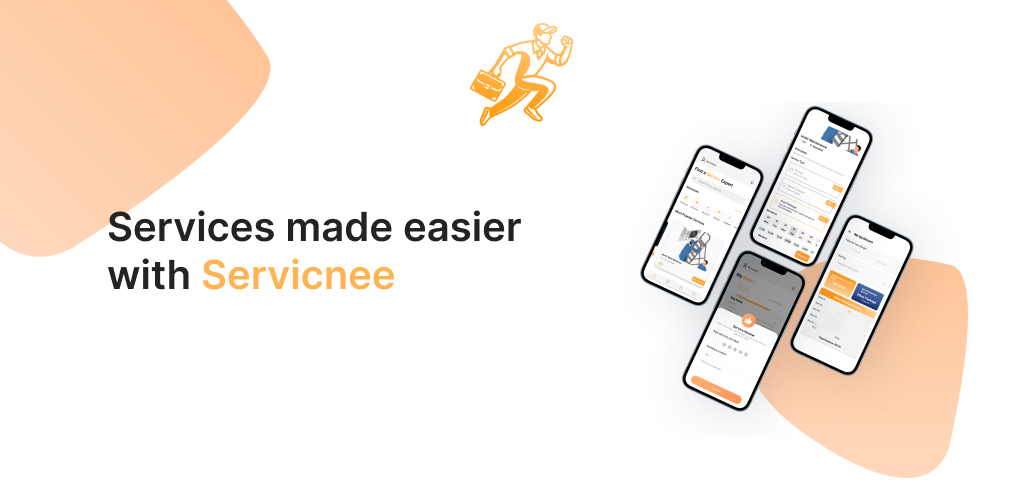
Servicnee was an attempt to bridge the gap between local service providers and their customers. The original thought was an application streamlining the process of finding service providers and enabling comparison across providers. Thus, allowing customers to find services fast; consequently, increasing competition and allowing for lower prices.
The Problem
I have noticed that as a service seeker there was no way to know good providers efficiently, other than literally going all around the city and getting their quotations. Or asking around about good plumbers in the area. Which prompted me with the solution of a platform connecting service providers with their clients.
Tech Stack
| Language | JavaScript |
| Library | React Native |
| Framework | Expo |
| Backend | Firebase / Node.js |
Key Features
- Effortless Search: Easily find services by keyword or category, saving time and energy through a custom search engine.
- Tailored Bookings: Select from various service packages and choose a schedule that fits your lifestyle with a time-slots booking system.
- Insightful Analytics: Monitor your monthly performance with baked-in analytics metrics.
- Community Insights: Read and share reviews so everyone in the community can make informed decisions via a rating & review system.
- Service Posting: Showcase services with up to 3 variants, special requests support, and AI-filtered images for safety.
- Order Management: View and sort through orders with the ability to communicate with the other party through a multi-stage ordering system.
Servicnee In Retrospect
The biggest challenge wasn’t the code; it was the User Experience (UX).
The Result: I took the project down to reflect and learn. This project taught me that Software Architecture is only 50% of the battle; the other 50% is Empathy for the User. In my newer projects, I try my best to lead with good human design in mind.
What to improve on: The UI was confusing, and the branding (“Servicnee”) didn’t immediately communicate the value of the platform. I realized that while I was busy building the “full product”, I ignored the simple connection that users actually needed.
All in all, Servicnee was a “failed” project in terms of numbers, but a massive success in terms of personal growth. As it was a graduation project, I tried to focus on technical capabilities but lost the picture of the business. It was a vital step in my journey toward building tools that actually liberate the user rather than just showing off code.